


Close


The Vietnamese traditional dress, known as Ao Dai, is more than just clothing. It is an emblem of Vietnamese identity, elegance, and cultural pride. Flowing like poetry and shaped with care, the Ao Dai weaves together stories of the country’s past and present. To see it worn gracefully on the streets of Vietnam is to witness living heritage in motion.
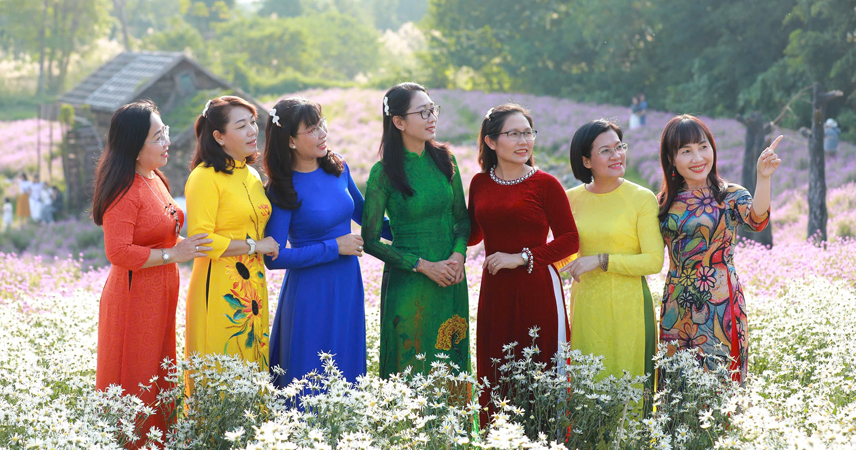
Ao Dai - The Vietnamese Traditional Dress
Whether you are walking through the lantern-lit alleys of Hoian, exploring historic temples in Hanoi, or attending a traditional wedding, the Ao Dai is everywhere. It transcends generations and settings, from everyday school uniforms to red-carpet events. In this guide, we delve into the rich history of this iconic garment, from its ancient origins to its contemporary role in Vietnamese life.
The Vietnamese traditional dress has a fascinating history stretching back centuries. Its earliest ancestors include the Ao Tu Than and Ao Ngu Than, worn by women in Vietnam's feudal era. These garments were practical and loose-fitting, allowing ease of movement while preserving modesty and femininity. As Vietnamese society evolved, so too did its clothing.
In the 1930s, a major transformation took place. Vietnamese artist Cat Tuong, also known by the name Le Mur, introduced Western-style tailoring to the Ao Dai. This redesign led to the form-fitting silhouette we recognize today. Later decades brought further innovation. In the 1950s, raglan sleeves became popular. In the 1970s, high collars and bold colors were introduced.
These stylistic changes turned the Ao Dai into a modern yet deeply cultural fashion statement. Today, it stands as one of the most recognizable symbols of Vietnam, beautifully combining heritage and innovation.
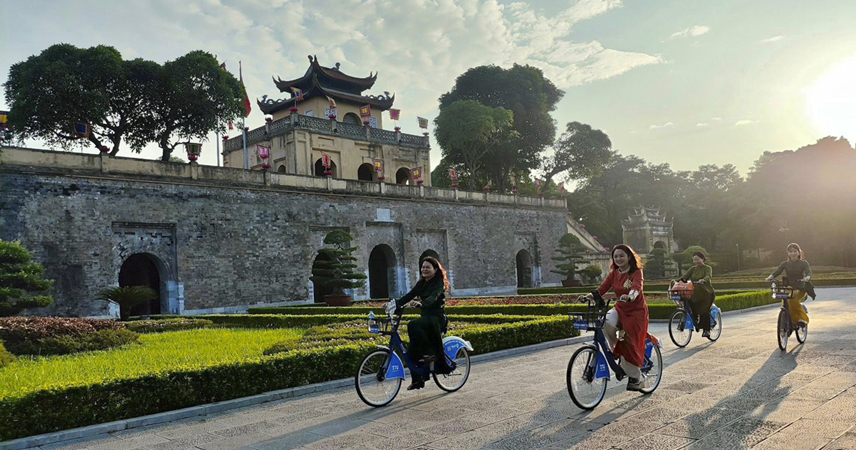
Explore Thang Long Imperial Citadel by bicycle in traditional Ao Dai
The Vietnamese traditional dress is admired for its elegant simplicity and sophisticated structure. Its unique features include:
These design elements allow the Ao Dai to be both elegant and practical, symbolizing beauty, tradition, and harmony.
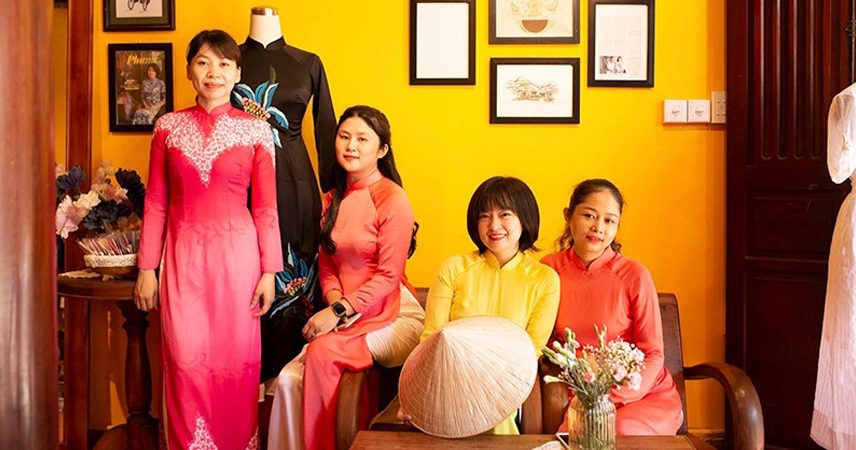
Design and Structure: What Makes an Ao Dai Unique
Both women and men wear the Vietnamese traditional dress, though their versions differ in style, color, and fit. Women’s Ao Dai are typically more fitted and colorful.
They may feature floral patterns, embroidery, or artistic designs, especially when worn for weddings, festivals, or formal photoshoots. A traditional headdress called a Khăn Đóng is often paired with the Ao Dai for ceremonies, adding extra grace and cultural depth.
Men’s Ao Dai, in contrast, is usually looser and less ornamented. It comes in darker shades such as black, navy, or royal blue and is commonly worn with a matching circular headpiece.
While traditional men’s Ao Dai tend to be simple and stately, modern versions are increasingly seen in fashion shows and cultural performances with updated cuts and decorative details.
These variations show how the Ao Dai has adapted over time while preserving its cultural roots.
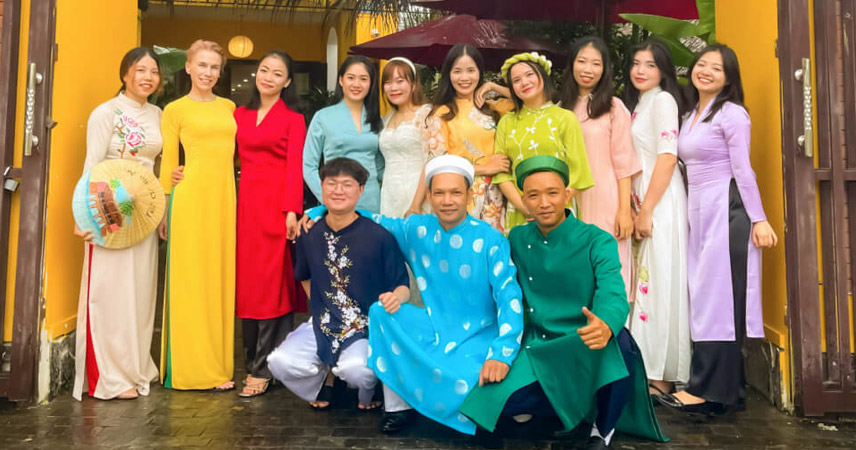
Types and Variations - Women’s & Men’s Ao Dai
The Vietnamese traditional dress carries symbolic meaning through both color and material:
Together, color and fabric reflect the occasion, the wearer’s role, and a deeper layer of cultural storytelling.
Far from being a relic of the past, the Vietnamese traditional dress continues to be a vibrant part of everyday life. In many high schools, especially in the central and southern regions of Vietnam, white Ao Dais are still worn as school uniforms. The image of students biking to class in flowing white Ao Dais is one of the most poetic sights in Vietnam.
Beyond schools, the Ao Dai is worn by flight attendants, especially on Vietnam Airlines, as well as hotel receptionists and civil servants, reinforcing national identity through professional uniforms. In the world of fashion, contemporary designers have embraced the Ao Dai, experimenting with shorter lengths, modern prints, and asymmetrical cuts.
You’ll see it featured in pop music videos, movies, and beauty pageants. Even travelers who come to Vietnam on Vietnam Tours often rent or purchase Ao Dais for photoshoots or special events. Whether traditional or modernized, the Ao Dai remains a beloved symbol of Vietnamese culture.
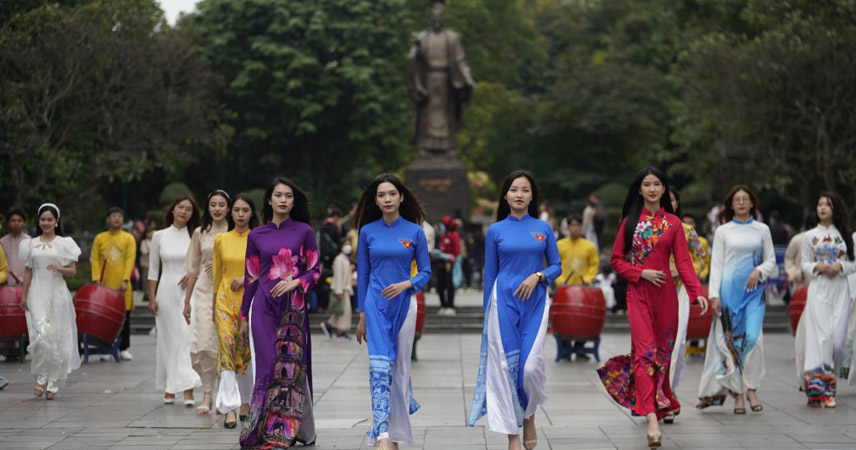
Ao Dai in Modern Culture and Daily Life
Buying or tailoring a Vietnamese traditional dress during your visit is a cultural experience in itself. Recommended locations include:
Tailoring typically takes 1 to 3 days, with prices ranging from $30 to $150 depending on material and design complexity. Many shops work with your hotel or a Vietnam travel agency to coordinate fittings and delivery.
The Vietnamese traditional dress shines most brightly during important events and holidays. During Tet, the Vietnamese New Year, streets are filled with people wearing brightly colored Ao Dais, often decorated with floral motifs and lucky symbols.
In weddings, brides traditionally wear red Ao Dais embroidered with gold thread. Some families even require both the bride and groom to wear Ao Dais during their engagement and wedding ceremonies, showcasing unity and tradition.
Students often wear white Ao Dais during graduation ceremonies, while officials and performers wear more elaborate versions during national holidays, cultural festivals, or parades. In cities like Hue and Ho Chi Minh City, Ao Dai Festivals are held to honor and promote the dress, featuring runway shows, photo contests, and exhibitions.
These events are often highlighted in popular Vietnam Tour Packages and attract visitors from around the world.
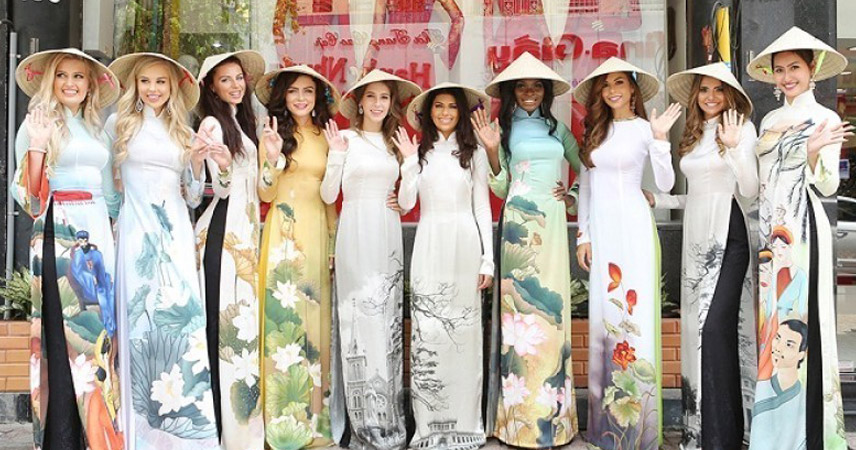
Ao Dai on Special Occasions
The Vietnamese traditional dress has traveled far beyond the country’s borders. It has been proudly worn at international forums such as UNESCO meetings and APEC summits. In beauty pageants like Miss Universe and Miss World, Vietnamese contestants often feature the Ao Dai in their national costume segments, bringing elegance and tradition to a global audience. The Ao Dai has also been worn by international celebrities visiting Vietnam and featured in global fashion magazines.
As a cultural ambassador, it speaks of grace, resilience, and pride. No comprehensive Vietnam Travel Guide is complete without a mention of the Ao Dai. Reputable Vietnam tour operator companies often encourage tourists to try one on as part of cultural excursions, sometimes even including Ao Dai rentals in their itinerary.
Many travel brochures, especially from platforms promoting Asia Tour Deals, feature images of smiling travelers in Ao Dai, surrounded by ancient temples and blooming flowers. The dress has become a visual shorthand for Vietnam itself.
To enjoy your Vietnamese traditional dress while traveling, keep in mind the following tips:
With these tips, you can wear your Ao Dai confidently and respectfully while creating unforgettable memories during your journey.
The Vietnamese traditional dress is much more than a beautiful piece of clothing. It is a cultural treasure, a symbol of national pride, and a living link between the past and the present.
Whether worn by a schoolgirl cycling to class, a bride on her wedding day, or a traveler exploring Vietnam for the first time, the Ao Dai tells a story of elegance, heritage, and Vietnamese spirit.
If you're planning your next adventure, don't forget to include the Vietnamese traditional dress in your list of cultural experiences. Try one on. Have it tailored. Take a photo under the lanterns of Hoian or by the Hoan Kiem Lake in Hanoi.
Let it be not just something you wear, but something you remember in your Vietnam Cultural Tour.

Need Help?
Our travel consultants are here to help 7 days a week, 8:30 am-6 pm.